Eco 360 | Partners

An Eco 360 environmental education program with Truth and Tales

Tree activities for kids: get to know one tree up close

3 activities of 10 to 20 minutes, plus a quick daily look at the seed

Where can you find a tree today?

Tap an answer to jump straight to the activity.

Tree activities for children ages 4 to 8 can be as simple as sprouting a bean, measuring a trunk with string or sitting under a tree to see who visits. These three Eco 360 activities suit any season and make a good start for Arbor Day, whenever it falls where you live.

Eco 360 is a nonprofit association that, since 2007, has protected a stretch of Atlantic Forest on top of Morro do Macaco, in Bombinhas, Santa Catarina, Brazil, and brings environmental education to the people who come close to it.

Illustration of tree trunks and leafy green crowns lit by warm sunlight

Three tree activities, from seed to forest

Start small with a seed in a jar, then meet a tree near you, then sit under a big one and watch. An adult guides each step; the child does the touching, drawing and counting.

A seed on the windowsill

Age
4 to 8 years
Time
10 minutes, then a few minutes a day

You will need

  • A clear glass jar
  • Cotton balls or paper towel
  • A dry bean or another large seed
  • Paper and pencils

How to do it

  1. Line the jar with damp cotton or folded paper towel and tuck the bean between the cotton and the glass, so you can see it.
  2. Set the jar on a bright windowsill and keep the cotton damp, adding a little water when it feels dry.
  3. Each day, your child draws the seed on a strip of paper: the skin splitting, the first root, the first leaves.
  4. Talk about what the seed seems to need: water, light, time. Let your child guess what will happen next.
  5. When the seedling has a few leaves, plant it in a pot of soil, or outdoors once the weather is warm enough.

What to notice: how slowly the changes happen and how your child waits for them. Checking on a seed every day is a small practice in patience and in spotting tiny differences.

Portrait of a tree

Age
4 to 8 years
Time
20 minutes

You will need

  • A tree in the yard, on the street or in the schoolyard
  • A long piece of string
  • Thin paper and a crayon with the wrapper peeled off

How to do it

  1. Choose a tree together and say hello to it. Ask your child to hug the trunk: do their arms meet around it?
  2. Wrap the string around the trunk at your child's chest height, tie a knot to mark the length and compare it with your child's arm span.
  3. Hold the paper against the bark and rub the side of the crayon over it until the pattern shows. Try a rubbing of a fallen leaf too.
  4. Look up into the branches and describe the shape of the crown: round, tall, spreading, bare.
  5. Put the bark rubbing, the knotted string and a drawing of the whole tree together as that tree's portrait.

What to notice: how many ways there are to know one tree: by touch, by size, by pattern. A child who spends time with a single tree may start to recognize it, and others like it, on later walks.

Who lives in the tree?

Age
4 to 8 years
Time
15 minutes

You will need

  • A large tree in a park or wood
  • Something to sit on
  • Paper and a pencil for the list

How to do it

  1. Find a big tree and sit a little way from the trunk, where you can see its roots and branches.
  2. Stay quiet for five minutes and watch. Whisper the name of every user of the tree you spot: birds, squirrels, ants, beetles, moss, lichen.
  3. Add the ones you can guess but not see right now: a nest high up, a hole in the trunk, the shade where people sit on hot days.
  4. Write the list together and count how many lives this one tree supports.
  5. Before leaving, ask: what would be different here without this tree? Listen to the answer without correcting it.

What to notice: how a tree that seemed to stand still turns out to be full of comings and goings. Sitting quietly for five minutes can feel hard at first, and like any exercise of attention it gets easier with repetition.

What one tree can show a child about paying attention

Trees change slowly, which makes them patient companions for young children. In spring the buds open, in summer the shade deepens, in autumn the leaves turn and drop, and in winter the bare branches reveal every nest. A child who follows one tree through the year gets used to watching small changes over time.

Within this program, attention, perception and emotional self-regulation are treated as abilities that develop in the early years through practice. Waiting for a seed to sprout, or sitting still long enough for a squirrel to come down, exercises exactly those abilities in a natural setting.

The premise is plain. When people learn to perceive themselves and what lives around them, they are in a better position to respect what a place, a person or a moment needs. Forests, in your town and in Brazil, depend on people like that.

  • Slow change

    A tree marks the seasons. Watching it over weeks gives children a reason to come back and compare.

  • Many senses

    Hugging, rubbing and listening under a tree bring touch and hearing into the activity, alongside sight.

  • Holding still

    Five quiet minutes under a tree are practice in keeping the body still so that shy creatures come out.

To carry on with a tablet or phone

Paint the tree you met

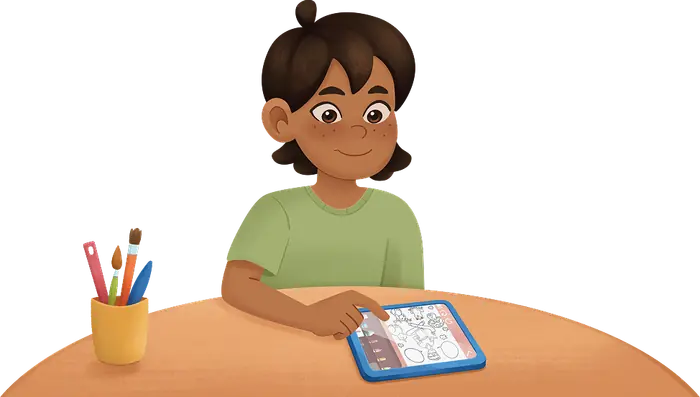
Once the bark rubbing is done, your child can keep coloring in the Artist's Gallery, with pictures to paint on the device at their own pace. The Artist's Gallery is free in Truth and Tales, together with Leo, the Lion, its audiobook and Move It.

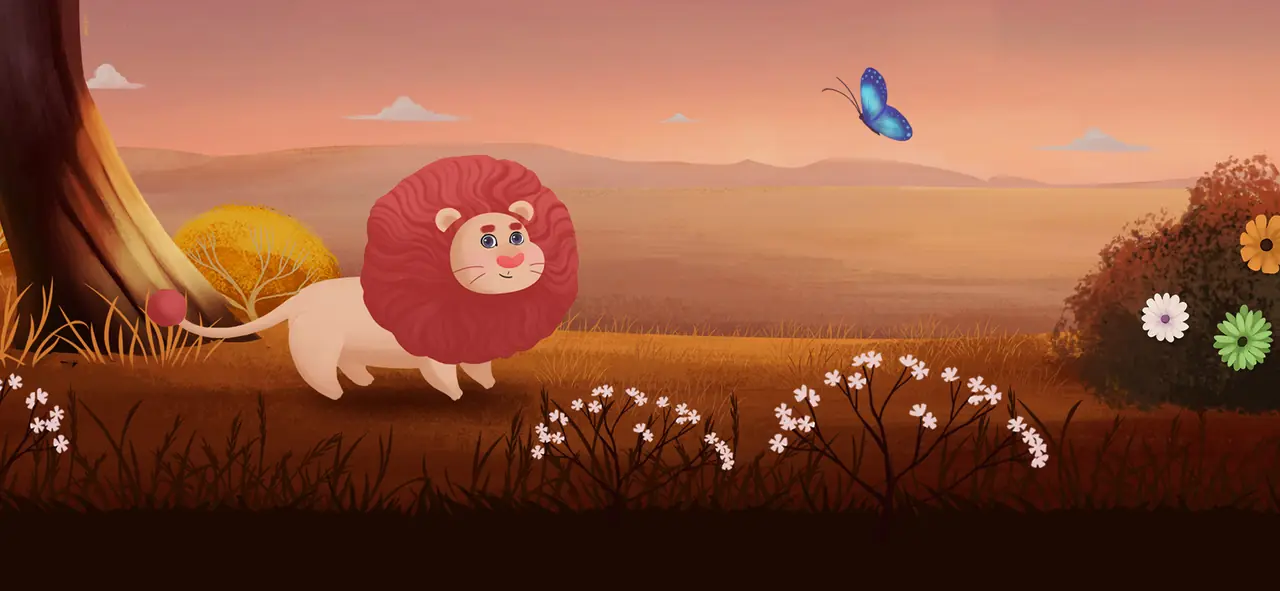
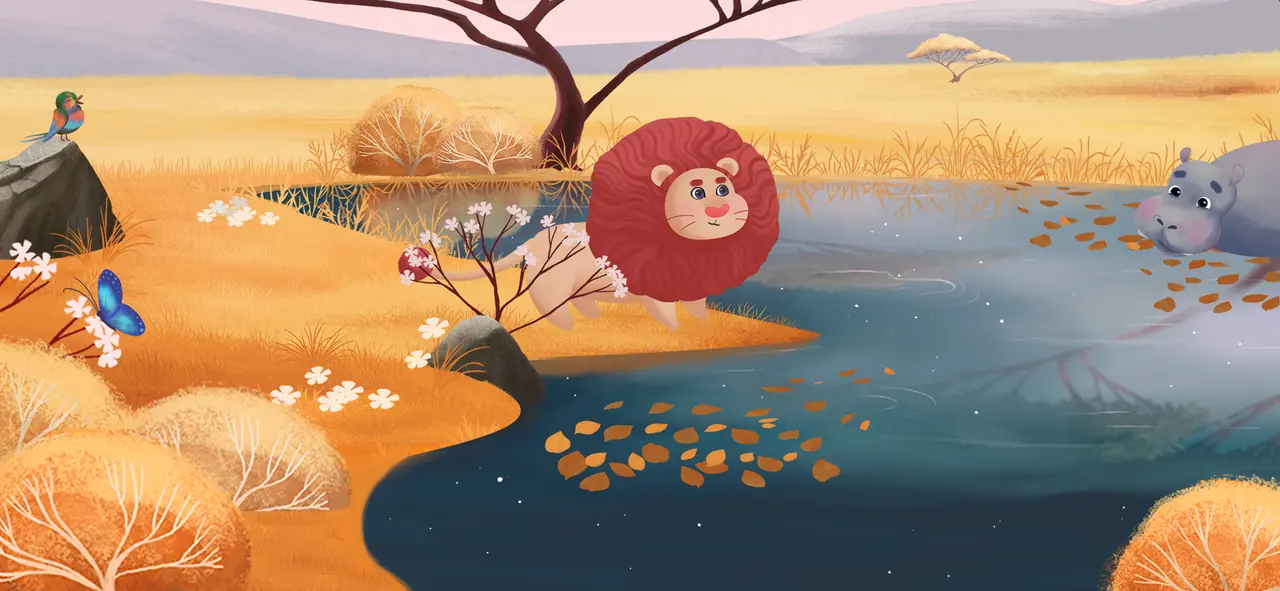
Scene from Leo, the Lion: the lion with a red mane at the edge of a savannah lake, with a hippo in the water and a blue butterfly nearby

What is free in the app

  • Artist's Gallery

    Painting

    Pictures to paint right on the device, at an easy pace and with no right or wrong.

  • Leo, the Lion

    Interactive narrative game, about 20 minutes

    Leo is a lion who roars happily across the savannah and cannot understand why the other animals run from him. Children build their own lion, tap, copy the sounds and follow Leo as he goes looking for water.

  • Leo, the Lion audiobook

    Audiobook, about 7 minutes

    The same Teaching Story to listen to slowly, eyes closed, in the car or before bed.

  • Move It

    Body movement activities

    Poses inspired by yoga and tai chi, such as the lion and the butterfly, to move the body and breathe with attention.

The app is available in English and Portuguese, for Android and iPhone.

The items above are free. The app has other content that is not part of this program. Truth and Tales belongs to Plot Kids, a partner of Eco 360.

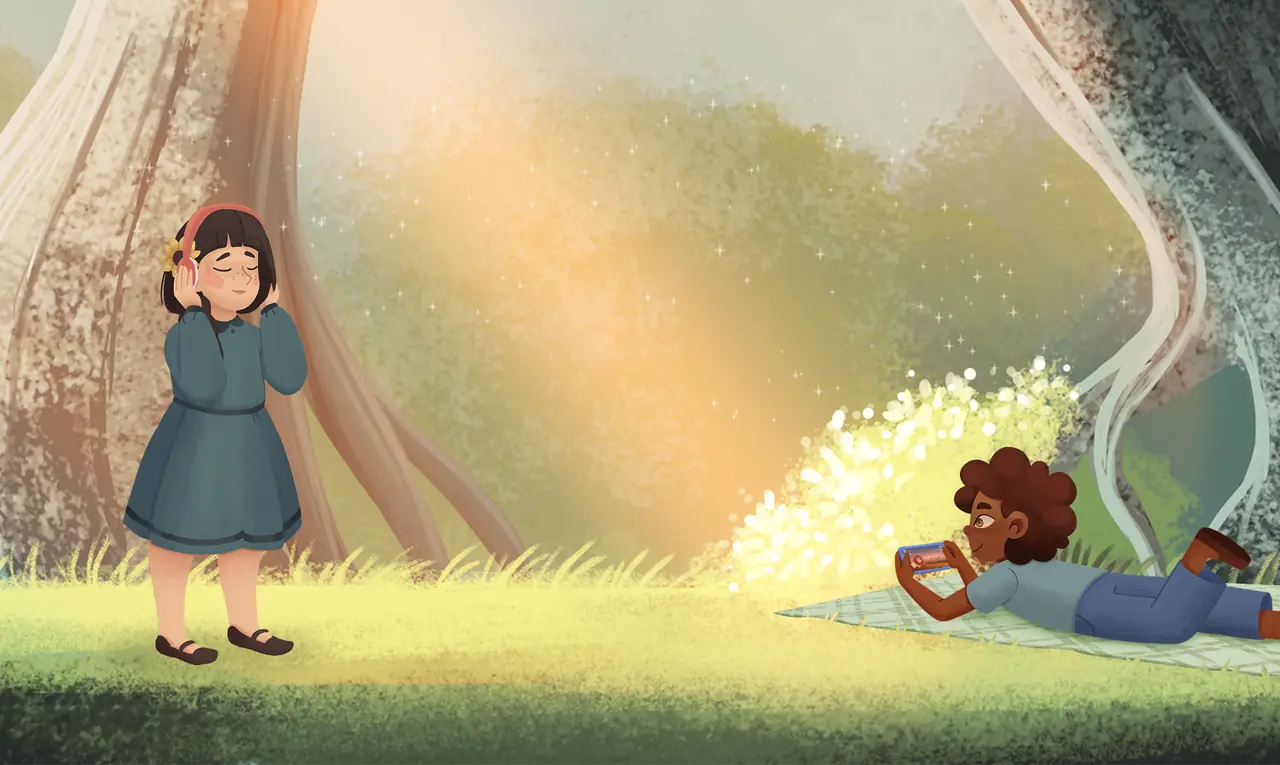
Illustration of a sunlit forest clearing: a girl stands with eyes closed, listening, and a boy lies on a picnic blanket under the trees

The trees of the Atlantic Forest

Eco 360 protects a stretch of Atlantic Forest on top of Morro do Macaco, in Bombinhas, Santa Catarina, Brazil. This coastal forest is home to many kinds of trees and plants that grow nowhere else, and the association has looked after its trails and biodiversity since 2007.

The trees near you belong to the same story. An oak on the corner, a maple in the park or a gum tree at school shelters birds, insects and people too, and a child who knows one tree well may look at the next one a little differently.

About the partnership

Eco 360 looks after the forest and runs environmental education. Truth and Tales brings technology and content for children. Together they created these activities to take environmental education into homes and classrooms.

What Eco 360 does

The Eco 360 Environmental Preservation Center protects the Atlantic Forest on top of Morro do Macaco, in Bombinhas, looks after the trails and keeps a controlled public visiting area. The purposes set out in its statute include environmental preservation, environmental education programs and partnerships with public and private institutions.

How Truth and Tales contributes

Truth and Tales is an app by Plot Kids for children ages 4 to 8, with interactive narrative games, audiobooks, body movement activities and painting. The app's Teaching Stories are written and adapted by people, with review by educators, therapists and doctors. In the program, the team contributes technology, illustrations and the app's free content.

Frequently asked questions

What are easy tree activities for preschoolers?

Simple activities suit children ages 4 to 8 well: sprouting a bean in a jar, doing a bark rubbing with a crayon, measuring a trunk with string, or sitting under a tree to see who visits. They need almost no materials, take 10 to 20 minutes and can be repeated in each season to compare what has changed.

When is Arbor Day, and can we do these activities then?

Arbor Day is held on different dates depending on the country, and in the United States the date varies from state to state, so check your local calendar. These activities fit the day well, but they work at any time of year. Each season shows a tree differently, from spring buds to autumn leaves and bare winter branches.

Can we pick leaves and flowers for these activities?

Use only what has already fallen. Leaf rubbings work with fallen leaves, and bark rubbings are made on the living tree without peeling anything off. Leaves, flowers and branches that are still growing stay on the tree, and berries or seeds found outdoors are for looking at, not tasting. An adult leads each activity.

Who created this program?

The program comes from Eco 360, a nonprofit association that protects Atlantic Forest on Morro do Macaco in Bombinhas, Brazil, working in partnership with Truth and Tales, an app by Plot Kids for children ages 4 to 8. Eco 360 brings its environmental education experience and the forest it cares for, and Truth and Tales adds technology and content.

Do we need the app for these tree activities?

No. A seed, a piece of string, a crayon and a tree are all you need, with no screen involved. If your child wants to carry on painting afterwards, the Artist's Gallery in the Truth and Tales app is free, along with Leo, the Lion, its audiobook and Move It, on Android and iPhone.

Open it on your phone or tablet

Point your phone's camera at the code. It opens the right store for your device.

Or see the app on the Truth and Tales website