
Eco 360 | Partners

An Eco 360 environmental education program with Truth and Tales

Animal stories for kids, and what to do after the last page

3 activities of 15 to 20 minutes after any story, with paper and a little room to move

Where will the story take you today?

Tap an answer to jump straight to the activity.

Animal stories for kids ages 4 to 8 can open a conversation about where animals live and what they need, without anyone explaining a lesson. This page offers three Eco 360 activities to do after any animal story, at bedtime or on a walk, and explains what Teaching Stories are.

Eco 360 is a nonprofit association that, since 2007, has protected a stretch of Atlantic Forest on top of Morro do Macaco, in Bombinhas, Santa Catarina, Brazil, and brings environmental education to the people who come close to it.

Illustration of a father and his son lying on cushions, reading a large illustrated book together

Three activities to go with animal stories

Pick any animal story you already love, from the library, your bookshelf or your own memory. These activities come after the story and leave its meaning to your child. Ask, listen and hold back from explaining; the questions have no right answers.

Listen, then draw the place

Age
4 to 8
Time
15 minutes

You will need

  • Any story with an animal in it
  • Paper and crayons

How to do it

  1. Read or tell the story without stopping to explain it.
  2. Afterwards, ask your child to draw where the animal lives: a savannah, a pond, a forest floor, a backyard, a burrow.
  3. Ask what the animal needs in that place: water, food, shade, a safe corner, others of its kind.
  4. Let your child add anything the story did not mention. Their version of the place counts as much as the book's.
  5. Hang the drawing near the bed and ask, another night, whether anything in it should change.

What to notice: the details your child chooses to draw. Imagining an animal's home and needs asks them to look from the animal's point of view, and the drawing shows what caught their attention in the story.

Animal theater

Age
4 to 8
Time
15 minutes

You will need

  • A backyard, a hallway or any room with space to move
  • Two or more players

How to do it

  1. Take turns choosing an animal in secret: a lion, a butterfly, an ant, a heron, a turtle.
  2. The player moves like that animal without making a sound: the lion's slow, heavy steps, the butterfly's light flutter, the ant carrying something big, the heron standing on one leg.
  3. The others watch closely and guess. A wrong guess just means more watching.
  4. After each guess, ask the mover how it felt to be that animal: heavy, quick, careful, patient?
  5. Finish with everyone moving as the animal from tonight's story.

What to notice: how your child adjusts their whole body to become small, slow or still. Holding the heron's pose on one leg is a small test of balance and patience, and the guessers practice watching carefully.

The story a place tells

Age
4 to 8
Time
20 minutes

You will need

  • A walk in a park or along a quiet street
  • Paper and a pen for the adult

How to do it

  1. On the walk, look out for animals from a distance: a squirrel, a duck, a line of ants, a bird on a wire. Watch without approaching.
  2. Back home or on a bench, ask your child to choose one animal and tell a short story about it. It can be true, invented or both.
  3. Write the story down word for word, without correcting it. Read it back to your child.
  4. Ask open questions afterwards: What do you think the squirrel was looking for? Where will it sleep tonight? What would you have done in its place?
  5. Keep the stories in a folder. Over a season, they make a small book about the animals of your neighborhood.

What to notice: what your child chose to notice on the walk and how they turned it into a story. Open questions with no right answer leave room for their own reading of what happened.

Why animal stories and nature belong together

An animal in a story is a way into a place. A child following a turtle across a pond or a fox through a forest starts wondering about water, burrows, seasons and hunger. When the story ends, those questions are still there, ready to be taken outside.

Teaching Stories are traditional tales with versions in many cultures, told without a moral at the end. Nobody tells the child what the story means. They notice for themselves, and what they notice may change from one telling to the next. That kind of listening calls on attention and perception, abilities that develop with practice in early childhood, alongside the regulation of emotions.

The program starts from one premise: a person who perceives themselves and what surrounds them is better placed to respect what each place, person and moment needs, and the care of nature depends on people like that. A story heard slowly, followed by open questions, is one more way to practice that perception.

  • No moral to memorize

    Leaving the meaning open lets each child find their own reading of the story, tonight and at the next retelling.

  • Questions without right answers

    Ask what a character might feel or need, and skip memory quizzes about what happened on page three.

  • From page to place

    Drawing, acting out and telling stories about animals you have seen links the book to the animals living near you.

To carry on with a tablet or phone

Meet Leo, the Lion

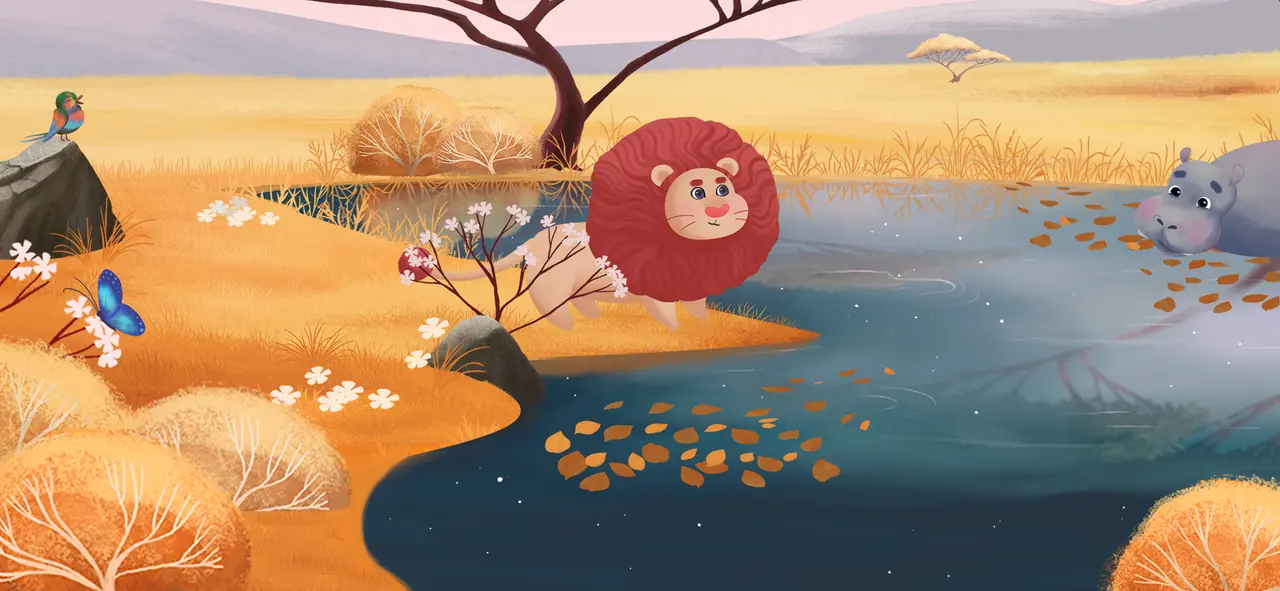
If your child likes stories about animals, Leo, the Lion is a Teaching Story told as an interactive narrative game: a lion who roars happily across the savannah, does not understand why the other animals run from him, and goes looking for water. The game, its audiobook, Move It and the Artist's Gallery are free in Truth and Tales.

Scene from Leo, the Lion: the lion with a red mane at the edge of a savannah lake, with a hippo in the water and a blue butterfly nearby

What is free in the app

  • Leo, the Lion

    Interactive narrative game, about 20 minutes

    Leo is a lion who roars happily across the savannah and cannot understand why the other animals run from him. Children build their own lion, tap, copy the sounds and follow Leo as he goes looking for water.

  • Leo, the Lion audiobook

    Audiobook, about 7 minutes

    The same Teaching Story to listen to slowly, eyes closed, in the car or before bed.

  • Move It

    Body movement activities

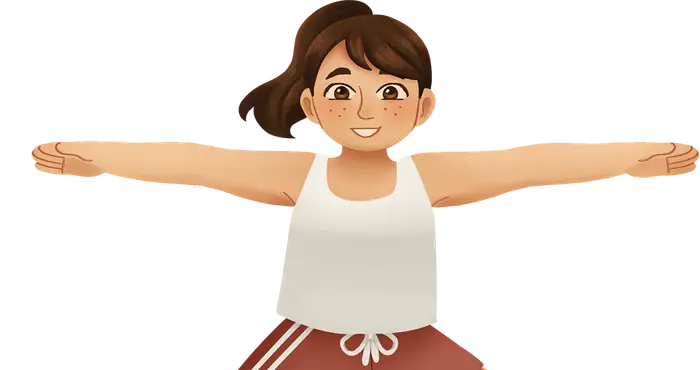
    Poses inspired by yoga and tai chi, such as the lion and the butterfly, to move the body and breathe with attention.

  • Artist's Gallery

    Painting

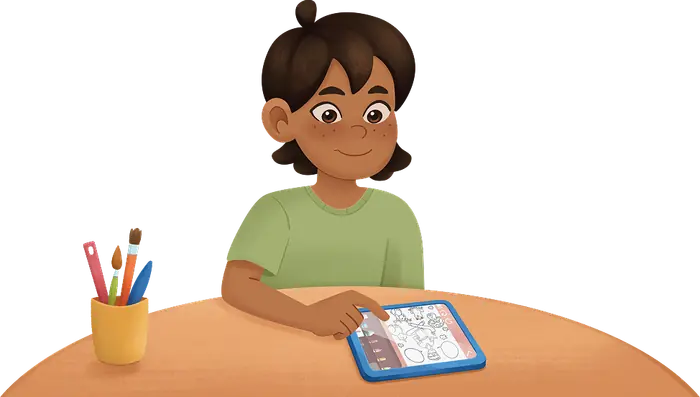
    Pictures to paint right on the device, at an easy pace and with no right or wrong.

The app is available in English and Portuguese, for Android and iPhone.

The items above are free. The app has other content that is not part of this program. Truth and Tales belongs to Plot Kids, a partner of Eco 360.

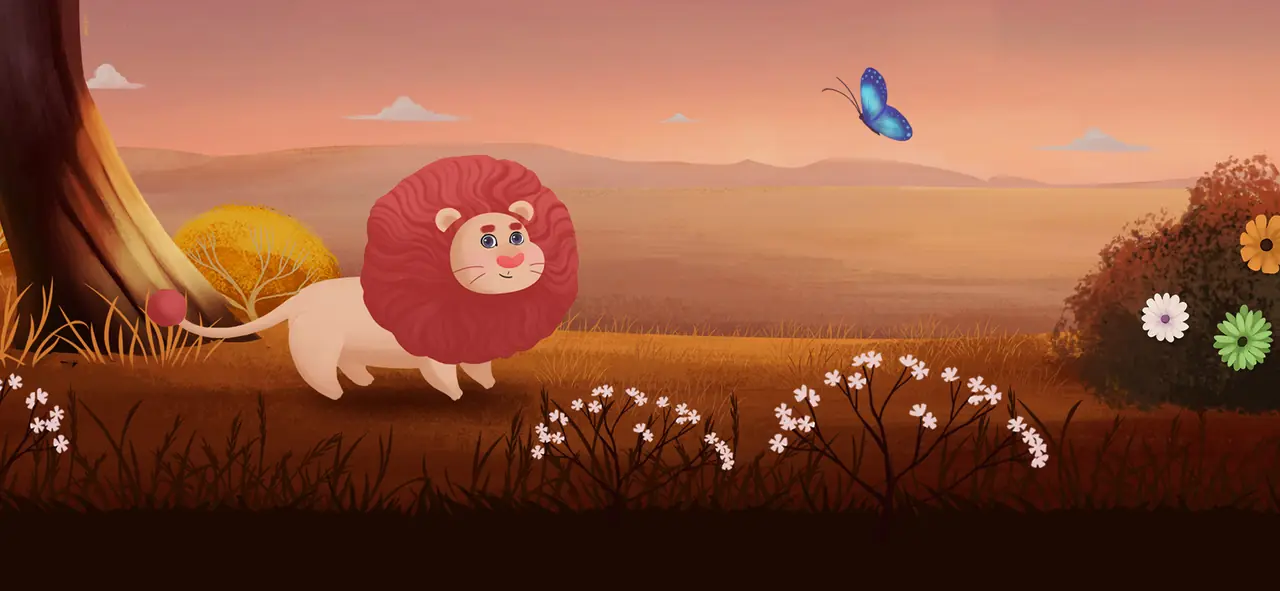
Scene from Leo, the Lion: a lion with a red mane walks across the golden savannah at sunset, with a blue butterfly above him

From the savannah in a story to the forest on Morro do Macaco

Stories carry children to places they may not see in person, such as the savannah or a tropical forest. One of those forests is the Atlantic Forest of Brazil, home to many species found nowhere else. In Bombinhas, Santa Catarina, Brazil, the nonprofit Eco 360 has protected a stretch of it on top of Morro do Macaco since 2007, looking after its trails and its biodiversity.

Your own town has its characters too: the pigeons on the square, the ducks on the pond, the robin in the hedge. When your child tells a story about one of them, the neighborhood becomes a setting worth looking at more closely, and worth caring for.

About the partnership

Eco 360 looks after the forest and runs environmental education. Truth and Tales brings technology and content for children. Together they created these activities to take environmental education into homes and classrooms.

What Eco 360 does

The Eco 360 Environmental Preservation Center protects the Atlantic Forest on top of Morro do Macaco, in Bombinhas, looks after the trails and keeps a controlled public visiting area. The purposes set out in its statute include environmental preservation, environmental education programs and partnerships with public and private institutions.

How Truth and Tales contributes

Truth and Tales is an app by Plot Kids for children ages 4 to 8, with interactive narrative games, audiobooks, body movement activities and painting. The app's Teaching Stories are written and adapted by people, with review by educators, therapists and doctors. In the program, the team contributes technology, illustrations and the app's free content.

Frequently asked questions

What makes a good animal story for a 4 year old?

Look for a clear setting, a few characters and room to wonder. At four, many children enjoy repetition, sounds they can imitate and animals that act a little like people while staying animals. Stories that leave something unsaid give children space to ask their own questions. Read slowly, pause on the pictures, and let your child interrupt.

What are Teaching Stories?

Teaching Stories are traditional tales found in many cultures, often with different versions from place to place. They are told without stating a moral, so each listener notices something of their own, and the same story can mean something new at another age. In the Truth and Tales app, the Teaching Stories are written and adapted by people, with review by educators, therapists and doctors.

What should I ask after a bedtime story about animals?

Choose questions with no right answer: What do you think the animal needed? How might it have felt? What would you have done? Where does it sleep tonight? Skip quizzes about the plot, because wondering matters more here than remembering. If your child does not want to talk, that is fine, and a quiet goodnight is a good ending too.

Who is behind this program?

The program belongs to Eco 360, a nonprofit association that protects Atlantic Forest on top of Morro do Macaco, in southern Brazil, and runs environmental education programs. It was created with Truth and Tales, an app by Plot Kids for children ages 4 to 8, which contributes technology, illustrations and the free content of its app.

Do I need the app to use these story activities?

No. The three activities work with any animal story, a book from the library or one you tell from memory, and need no screen. If your family wants to keep going, the Truth and Tales app has Leo, the Lion as an interactive game and as an audiobook, along with Move It and the Artist's Gallery, all free on Android and iPhone.

Open it on your phone or tablet

Point your phone's camera at the code. It opens the right store for your device.

Or see the app on the Truth and Tales website