Eco 360 | Partners

An Eco 360 environmental education program with Truth and Tales

Environmental education for kids starts with paying attention

3 activities of 10 to 20 minutes, no special materials

Where are you today?

Tap an answer to jump straight to the activity.

Environmental education for children ages 4 to 8 starts with noticing the place where you are: the sounds, the small creatures, the water and the plants. Here you will find three short Eco 360 activities to try at home, in the yard or on a walk, and see why attention and care go together.

Eco 360 is a nonprofit association that, since 2007, has protected a stretch of Atlantic Forest on top of Morro do Macaco, in Bombinhas, Santa Catarina, Brazil, and brings environmental education to the people who come close to it.

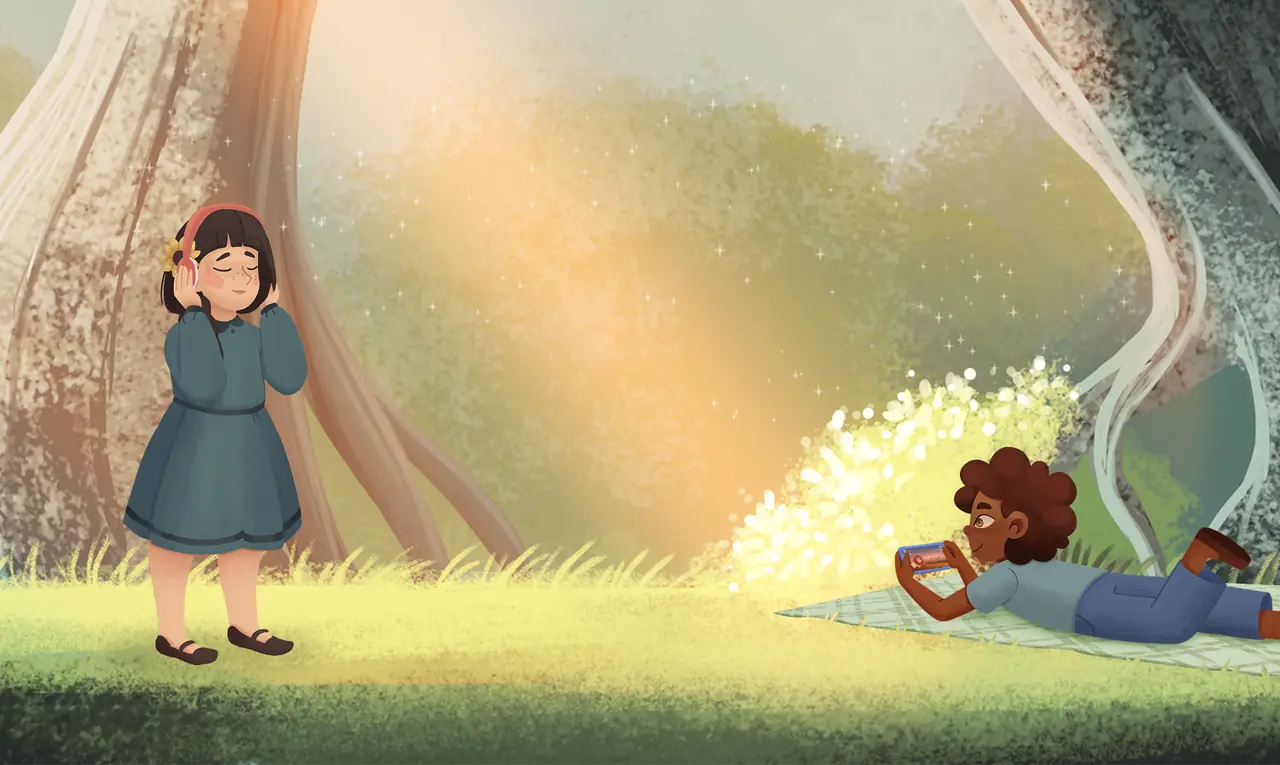
Illustration of a sunlit forest: a girl stands listening to the sounds around her while a boy lies on a picnic blanket

Three environmental education activities to start today

Each activity practices one way of paying attention. Do it together with your child, without hurrying, and let them tell you what they noticed before you explain anything.

The nature window

Age
4 to 8 years
Time
10 minutes

You will need

  • A window with a view outside
  • Paper and colored pencils

How to do it

  1. Pick a window together and agree on two minutes of quiet, just to look and listen.
  2. Count on your fingers how many different sounds reach you from outside: birds, wind, rain, voices, traffic.
  3. Ask your child to draw everything alive in the scene: a tree, an insect, a pigeon on a roof, a neighbor's dog.
  4. Ask: who lives near us? Let the list grow without correcting it.
  5. Keep the drawing and come back on another day, at a different hour or in a different season, to compare.

What to notice: how the scene changes with the time of day and the weather. Your child begins to see that nature is close to home too, even from a city apartment.

A square of life

Age
5 to 8 years
Time
15 minutes

You will need

  • About 13 feet (4 meters) of string
  • A magnifying glass, if you have one

How to do it

  1. Use the string to mark a square on the ground, about a yard or a meter on each side, on grass, bare soil or a flower bed.
  2. Agree on the rule: we look, and we leave everything growing. Any stone or leaf you lift goes back where it was.
  3. Count together every living thing inside the square: ants, worms, sprouts, mushrooms, seeds, a spider's thread.
  4. Ask your child to choose one creature and say what they think it is doing there.
  5. When you finish, roll up the string and leave the square as you found it.

What to notice: how many living things fit into such a small space, and how your child handles the urge to pick things up. Waiting, and putting the stone back, is a form of care too.

A hundred quiet steps

Age
4 to 8 years
Time
20 minutes

You will need

  • A park, a tree-lined square or another green space
  • Comfortable clothes and shoes

How to do it

  1. Before you start, agree on a hand signal for when someone hears a new sound.
  2. Walk a hundred steps slowly and quietly, counting under your breath. Whoever hears a sound gives the signal, and everyone stops to listen.
  3. At the end of the hundred steps, each person shares three things they heard and one thing they saw for the first time.
  4. Walk back the same way paying attention to smells and textures, leaving leaves and flowers on their stems.

What to notice: how many sounds your child can tell apart, and whether they pick up on things that used to go unnoticed, like a hidden bird or running water.

Why attention and self-regulation belong in environmental education

Caring for a place starts with noticing what it needs. A child who learns to stop, look and listen spots the nest in the tree, the puddle that has dried up and the squirrel that hides when someone shouts. That kind of attention is the ground any conversation about protecting nature stands on.

Attention, perception and the regulation of emotions are abilities that develop in early childhood and grow with practice. When a child can wait, breathe and notice what they feel, it also gets easier to notice what lies outside them: the person beside them, an animal, a plant, the moment.

The program starts from that simple idea. People who learn to perceive themselves and what surrounds them are better placed to respect what each place, each person and each moment needs, and protecting the environment depends on people like that.

  • Attention

    Stopping to watch for a few minutes is an exercise. Like any ability, it grows with repetition.

  • Perception

    Noticing sounds, details and changes helps children see that their surroundings are alive and change over time.

  • Self-regulation

    Waiting a turn, speaking softly near animals and leaving the flower where it grows: caring for nature also means handling one's own impulses.

To carry on with a tablet or phone

Keep the conversation going with Leo, the Lion

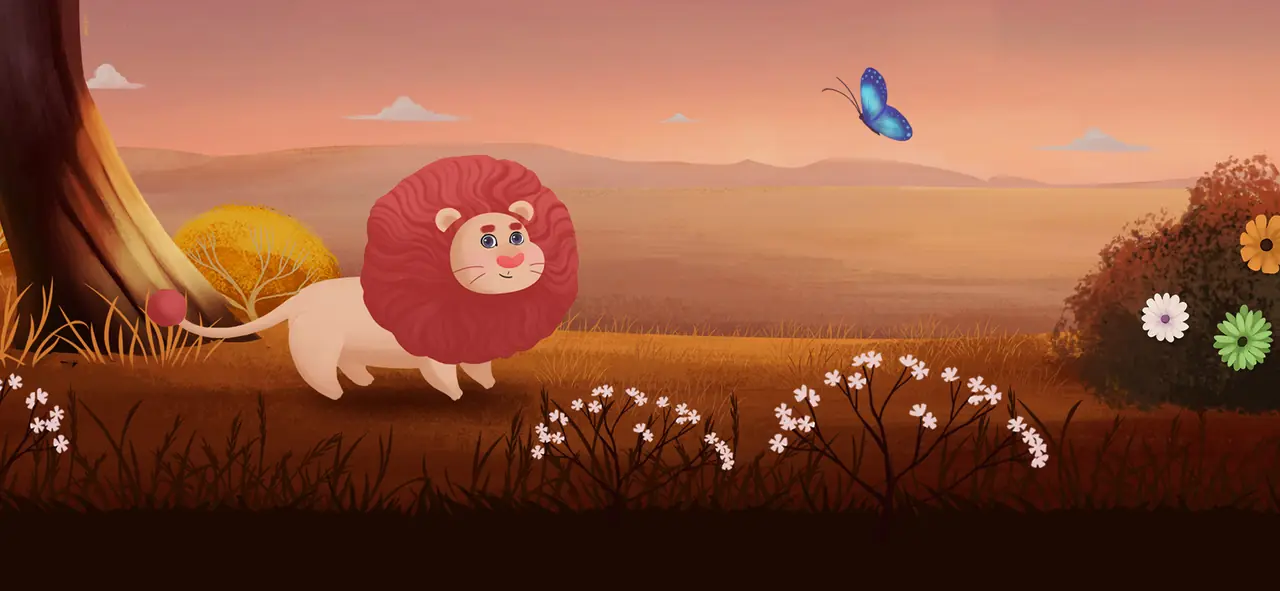
After listening to nature, your child can follow Leo, a lion who roars happily across the savannah and goes looking for water. Leo, the Lion, its audiobook, the Move It poses and the Artist's Gallery painting are free in Truth and Tales.

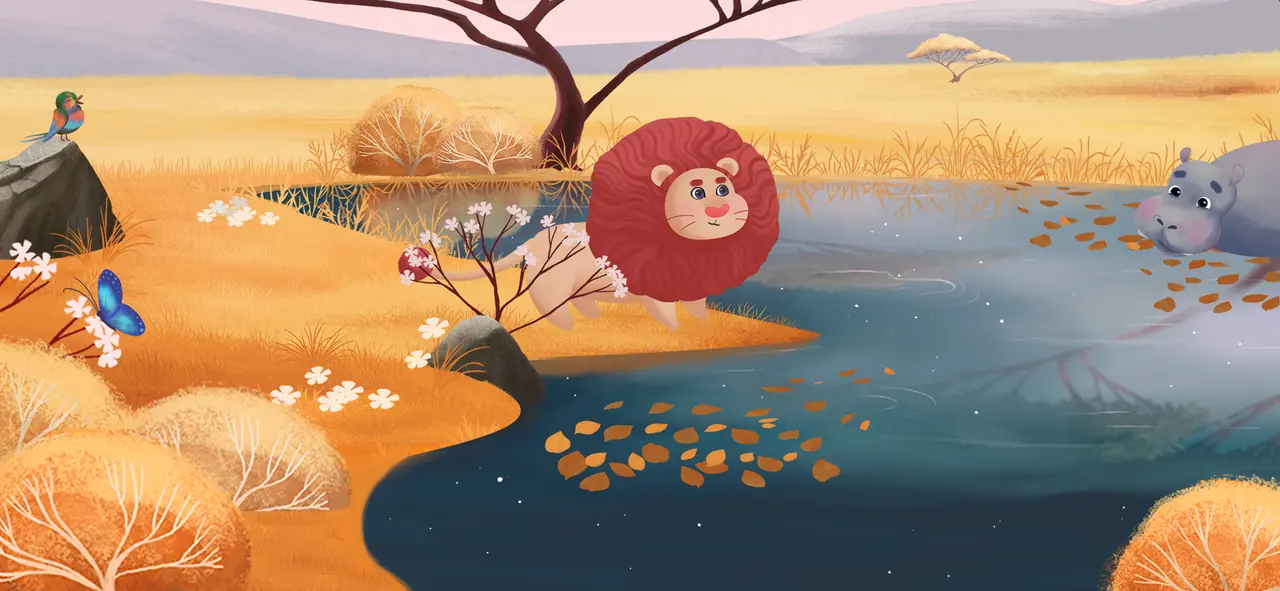
Scene from Leo, the Lion: the lion with a red mane at the edge of a savannah lake, with a hippo in the water and a blue butterfly nearby

What is free in the app

  • Leo, the Lion

    Interactive narrative game, about 20 minutes

    Leo is a lion who roars happily across the savannah and cannot understand why the other animals run from him. Children build their own lion, tap, copy the sounds and follow Leo as he goes looking for water.

  • Leo, the Lion audiobook

    Audiobook, about 7 minutes

    The same Teaching Story to listen to slowly, eyes closed, in the car or before bed.

  • Move It

    Body movement activities

    Poses inspired by yoga and tai chi, such as the lion and the butterfly, to move the body and breathe with attention.

  • Artist's Gallery

    Painting

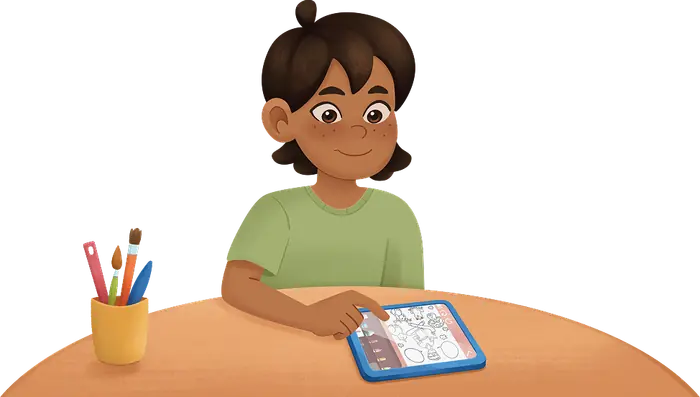
    Pictures to paint right on the device, at an easy pace and with no right or wrong.

The app is available in English and Portuguese, for Android and iPhone.

The items above are free. The app has other content that is not part of this program. Truth and Tales belongs to Plot Kids, a partner of Eco 360.

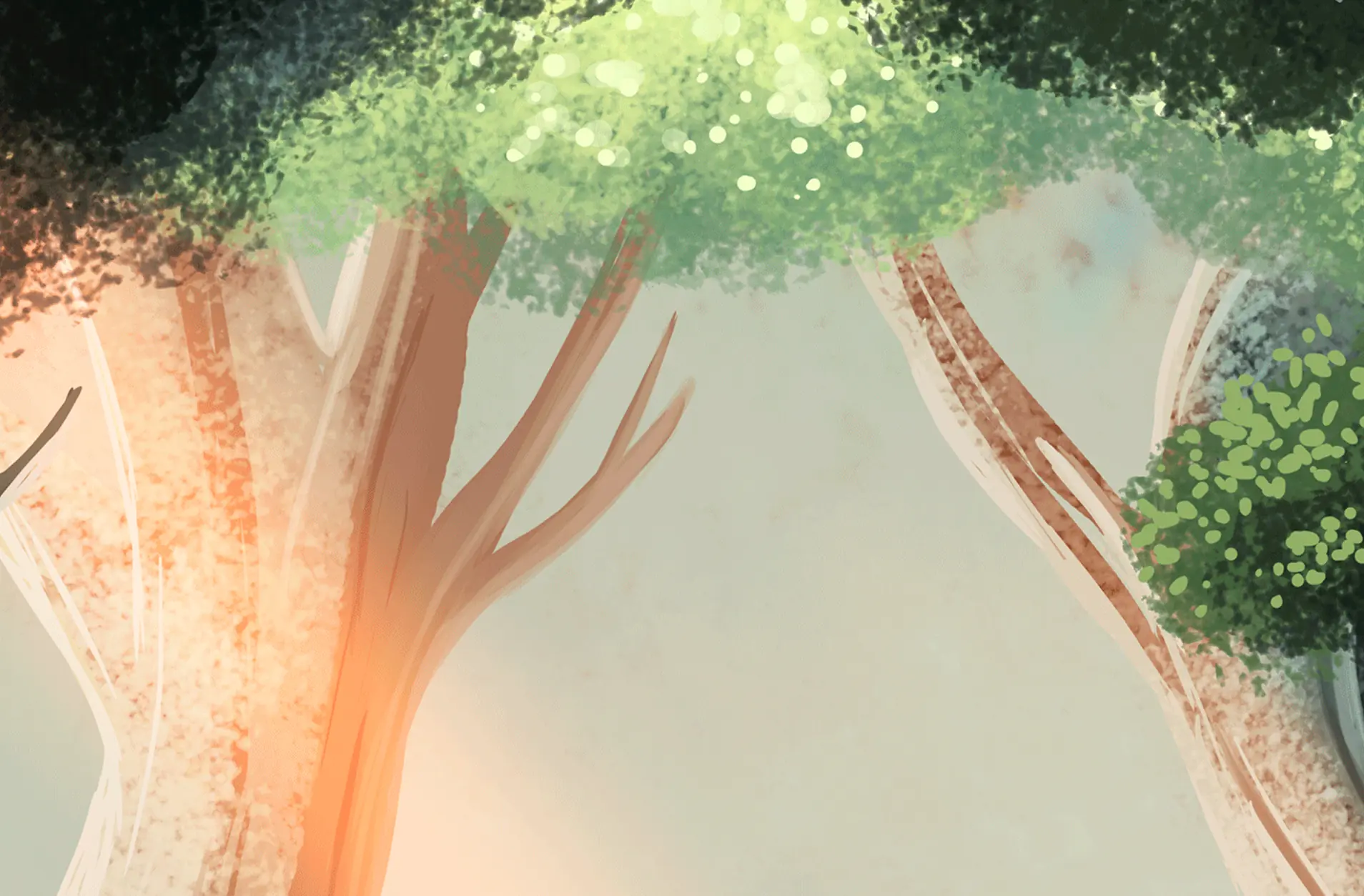
Illustration of tree trunks and leafy crowns in a sunlit forest

The forest Eco 360 protects

On top of Morro do Macaco, in Bombinhas, Santa Catarina, Brazil, Eco 360 has looked after a stretch of Atlantic Forest since 2007. The nonprofit maintains the trails, protects the area's biodiversity and brings environmental education to the people who visit.

The activities on this page were designed for any town or city, from Toronto to Auckland. A yard, a local park or a window is enough for a child to sense that they, too, are part of the place where they live.

About the partnership

Eco 360 looks after the forest and runs environmental education. Truth and Tales brings technology and content for children. Together they created these activities to take environmental education into homes and classrooms.

What Eco 360 does

The Eco 360 Environmental Preservation Center protects the Atlantic Forest on top of Morro do Macaco, in Bombinhas, looks after the trails and keeps a controlled public visiting area. The purposes set out in its statute include environmental preservation, environmental education programs and partnerships with public and private institutions.

How Truth and Tales contributes

Truth and Tales is an app by Plot Kids for children ages 4 to 8, with interactive narrative games, audiobooks, body movement activities and painting. The app's Teaching Stories are written and adapted by people, with review by educators, therapists and doctors. In the program, the team contributes technology, illustrations and the app's free content.

Frequently asked questions

What is environmental education for children ages 4 to 8?

At this age, environmental education comes more through experience than through concepts. Children learn by watching, touching gently, listening and talking about what they saw. Short activities, repeated on different days and in different seasons, help build the habit of noticing their surroundings and treating plants, animals and people with respect.

Do we need to live near nature to do these activities?

No. The activities work at an apartment window, in a small backyard or in a neighborhood park. What matters is stopping for a few minutes and paying attention alongside your child. If there is a green space nearby, the quiet walk becomes even richer, but you can start without one.

Who runs this program?

The program belongs to Eco 360, a nonprofit association that protects the Atlantic Forest on Morro do Macaco in Bombinhas, Brazil, working in partnership with Truth and Tales, an app by Plot Kids for children ages 4 to 8. Eco 360 brings its experience in environmental education, and Truth and Tales contributes technology and content.

Do we need the app to take part?

No. Every activity on this page can be done without a screen. The Truth and Tales app is an extra for families who want to keep going: the story Leo, the Lion, its audiobook, the Move It movement activities and the Artist's Gallery painting are free, for Android and iPhone.

Why talk about attention and feelings in an environmental program?

Because caring starts with noticing. A child who can wait, listen and recognize what they feel is also better placed to notice what is around them, including what a place needs to stay alive. That is why the activities mix watching nature with moments of pause and conversation.

Open it on your phone or tablet

Point your phone's camera at the code. It opens the right store for your device.

Or see the app on the Truth and Tales website