Eco 360 | Partners

An Eco 360 environmental education program with Truth and Tales

Social emotional activities for preschoolers, with nature as the setting

3 activities of 10 to 20 minutes, with paper, crayons and some open air

Where are you starting?

Tap an answer to jump straight to the activity.

Social emotional learning at ages 4 to 8 is built from small, repeated moments: naming a feeling, noticing the breath, wondering what someone else needs. These three Eco 360 activities use weather, trees and animals to practice those moments at home, in the backyard and outdoors, with no right or wrong answers.

Eco 360 is a nonprofit association that, since 2007, has protected a stretch of Atlantic Forest on top of Morro do Macaco, in Bombinhas, Santa Catarina, Brazil, and brings environmental education to the people who come close to it.

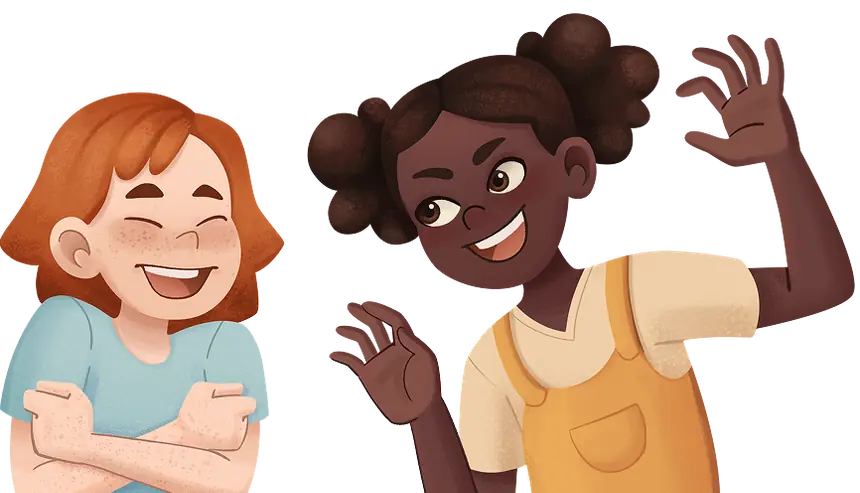
Illustration of two laughing children: a red-haired girl hugs herself and a girl in yellow overalls makes lion claws with her hands

Three social emotional learning activities rooted in nature

Feelings are easier to talk about when they have a shape. Here they become weather, wind in the branches and the needs of a small animal. Go slowly, accept every answer, and share your own feelings too, so your child sees that adults have weather inside as well.

The weather inside

Age
4 to 8
Time
10 minutes

You will need

  • Paper and crayons
  • A window, to compare with the weather outside

How to do it

  1. Look out the window together and name today's weather: sunny, cloudy, rainy, windy, stormy, foggy, snowy.
  2. Ask: if your feelings were weather right now, what would they be? Offer words without choosing for your child.
  3. Your child draws the weather inside: a sun, a gray cloud, a little drizzle, a storm with lightning.
  4. Ask where that weather sits in the body. Is the sun in the chest? Is the storm in the hands?
  5. Say that every kind of weather is allowed, and that weather changes. Draw again later in the day or tomorrow and compare.

What to notice: the words your child picks and where they place a feeling in the body. Naming a feeling is one way to start recognizing it, and no weather is the wrong one.

Breathe like a tree

Age
4 to 8
Time
10 minutes

You will need

  • A patch of grass, soil or floor where your child can stand
  • A tree nearby to watch, if you have one

How to do it

  1. Watch a tree for a moment. How do its branches move in the wind? Does the trunk move too?
  2. Stand like a tree: feet apart and planted like roots, arms up and open like branches.
  3. Breathe in slowly through the nose as the arms rise, and out through the mouth as the wind sways the branches from side to side.
  4. Now a storm arrives. Shake arms, hands and shoulders hard for a few seconds.
  5. The storm passes. Come back to standing still, feel the feet on the ground and take three slow breaths.
  6. Ask: what did the tree feel during the storm? And after it?

What to notice: how your child moves between the storm and the stillness. Going from shaking to standing quietly is a body-level exercise in self-regulation, and some days it will come more easily than others.

What does this animal need?

Age
4 to 8
Time
15 to 20 minutes

You will need

  • A spot where you can see a bird, ants, a squirrel or a neighbor's dog from a distance
  • A little patience

How to do it

  1. Find an animal you can watch from several steps away. Stay where you are and keep voices low.
  2. Watch for a minute without talking. What is it doing? Eating, searching, resting, keeping watch?
  3. Ask your child to guess what the animal needs right now: food, water, shelter, rest, space.
  4. Talk about distance. If you walked closer, how might the animal feel? What would it do?
  5. Back home, your child can draw the animal and what it needed, and tell you how they could tell.

What to notice: the guesses your child makes about the animal's needs. Reading another creature's signals from a distance is practice in perspective, and staying back so the animal feels safe is a choice they make with their body.

Why feelings belong in environmental education

Caring for a place begins inside the person who visits it. A child who can notice their own excitement, slow down a little and wait has more room to notice the heron at the edge of the pond before it flies off. Emotions and the environment meet in that pause.

Self-regulation, attention and perception are abilities that develop through early childhood, and practice helps them grow. Social emotional activities give that practice a shape: naming feelings as weather, breathing with the wind, guessing what an animal needs. They are exercises to repeat over weeks, and every child moves at their own pace.

The program rests on that idea. Someone who perceives themselves and what is around them is better placed to respect what each place, person and moment needs, and the protection of nature depends on people like that. Reading the weather inside and the needs of a small animal draw on the same attention.

  • Naming

    A word or a picture gives a feeling a handle. Weather offers young children a vocabulary they already know.

  • Breathing

    Slow breaths and a shake-out give the body a simple way to practice moving between big energy and stillness.

  • Perspective

    Wondering what an animal needs is a gentle way to practice thinking about others, people included.

To carry on with a tablet or phone

Keep moving and breathing with Move It

If your child enjoyed standing like a tree, Move It continues with body movement activities inspired by yoga and tai chi, such as the lion and the butterfly, with attention on the breath. Move It, the Leo, the Lion game and audiobook, and painting in the Artist's Gallery are free in Truth and Tales.

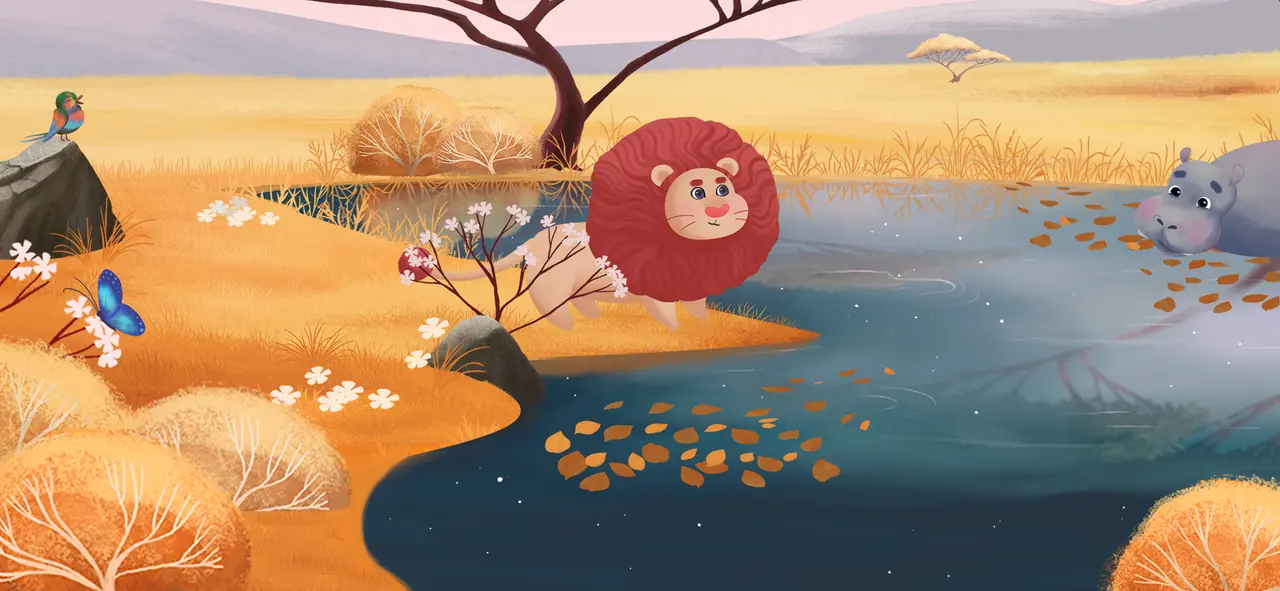
Scene from Leo, the Lion: the lion with a red mane at the edge of a savannah lake, with a hippo in the water and a blue butterfly nearby

What is free in the app

  • Move It

    Body movement activities

    Poses inspired by yoga and tai chi, such as the lion and the butterfly, to move the body and breathe with attention.

  • Leo, the Lion

    Interactive narrative game, about 20 minutes

    Leo is a lion who roars happily across the savannah and cannot understand why the other animals run from him. Children build their own lion, tap, copy the sounds and follow Leo as he goes looking for water.

  • Leo, the Lion audiobook

    Audiobook, about 7 minutes

    The same Teaching Story to listen to slowly, eyes closed, in the car or before bed.

  • Artist's Gallery

    Painting

    Pictures to paint right on the device, at an easy pace and with no right or wrong.

The app is available in English and Portuguese, for Android and iPhone.

The items above are free. The app has other content that is not part of this program. Truth and Tales belongs to Plot Kids, a partner of Eco 360.

Watercolor illustration of soft golden light falling between tree trunks in a forest

Giving animals space, from the Atlantic Forest to your street

On top of Morro do Macaco, in Bombinhas, Santa Catarina, Brazil, the nonprofit Eco 360 has cared for a stretch of Atlantic Forest since 2007. It looks after the trails, protects the area's biodiversity and keeps a controlled public visiting area. Quiet voices and keeping to the path are part of visiting a forest like that.

The animals near your home deserve the same respect. The pigeon on the sidewalk, the ants in a crack and the dog behind a fence each have their own needs and their own sense of a safe distance. Noticing that on an ordinary walk is the same practice a protected forest asks of its visitors.

About the partnership

Eco 360 looks after the forest and runs environmental education. Truth and Tales brings technology and content for children. Together they created these activities to take environmental education into homes and classrooms.

What Eco 360 does

The Eco 360 Environmental Preservation Center protects the Atlantic Forest on top of Morro do Macaco, in Bombinhas, looks after the trails and keeps a controlled public visiting area. The purposes set out in its statute include environmental preservation, environmental education programs and partnerships with public and private institutions.

How Truth and Tales contributes

Truth and Tales is an app by Plot Kids for children ages 4 to 8, with interactive narrative games, audiobooks, body movement activities and painting. The app's Teaching Stories are written and adapted by people, with review by educators, therapists and doctors. In the program, the team contributes technology, illustrations and the app's free content.

Frequently asked questions

What are social emotional activities for preschoolers?

They are short, playful exercises that give young children a chance to practice recognizing feelings, handling big energy and noticing others. Examples include naming emotions with pictures, breathing games, taking turns and guessing what someone else needs. At 4 to 8, they suit children better when they are concrete and brief, repeated often, and when the adult joins in instead of instructing.

Are these activities a way to change my child's behavior?

We do not promise any change in behavior, and every child is different. What these activities offer is practice: a few minutes of noticing feelings, breathing slowly and moving from big movement to stillness. A shared language, such as storm or sunshine, can make it easier to talk about feelings later. If you are worried about your child's emotions, talk with your child's doctor or a specialist.

How is this connected to nature and the environment?

Caring for nature starts with noticing it, and noticing needs a pause. A child who can recognize their own excitement and wait has more room to watch a bird without chasing it, or to leave a flower on its stem. That is why this environmental education program combines feelings, breathing and watching animals from a respectful distance.

Who is behind these activities?

Eco 360, a nonprofit association founded in 2007 that protects a stretch of Atlantic Forest on Morro do Macaco in southern Brazil, created this program together with Truth and Tales. Truth and Tales is an app by Plot Kids for children ages 4 to 8, and it supports the program with technology, illustrations and content.

Is the Truth and Tales app required?

No. Each activity here works with paper, crayons, a tree and an animal to watch, and none needs a screen. For families who want to continue on a tablet or phone, the app offers Leo, the Lion, its audiobook, the Move It movement activities and the Artist's Gallery for painting, all free, on Android and iPhone.

Open it on your phone or tablet

Point your phone's camera at the code. It opens the right store for your device.

Or see the app on the Truth and Tales website