Eco 360 | Partners

An Eco 360 environmental education program with Truth and Tales

Recycling activities for kids: sort it, reuse it, leave no trace

3 activities of 15 to 30 minutes, made with clean packaging you already have

Where will you try it today?

Tap an answer to jump straight to the activity.

Recycling with children ages 4 to 8 works well as something they do with their hands: sorting clean packaging, turning a carton into a toy, carrying their own wrappers home from a walk. Here are three short Eco 360 activities for home, the backyard and the park, and why looking closely at what we throw away matters.

Eco 360 is a nonprofit association that, since 2007, has protected a stretch of Atlantic Forest on top of Morro do Macaco, in Bombinhas, Santa Catarina, Brazil, and brings environmental education to the people who come close to it.

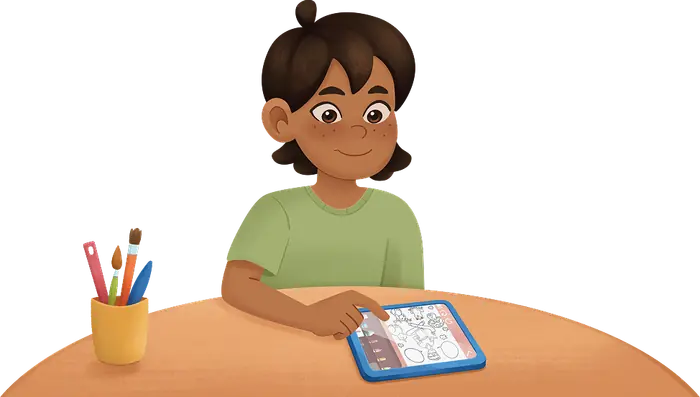
Illustration of a smiling child at a round table painting on a tablet, with a cup of brushes and pencils beside it

Three recycling activities for preschoolers and older kids

Each activity asks your child to look at an object twice: once as trash, and once as something with a material, a weight and a next stop. Wash the packaging beforehand and keep anything sharp out of reach. Let your child explain their choices before you add yours.

The sorting game

Age
4 to 8
Time
15 minutes

You will need

  • Four boxes or bags
  • Colored paper or markers to label them
  • A handful of clean, dry packaging: a carton, a jar lid, a bottle, a cereal box

How to do it

  1. Wash and dry the packaging together, then spread it out on the floor or a table.
  2. Give each box a color and a material: paper, plastic, glass and metal. If your local bins use particular colors, copy them.
  3. Hand your child one item at a time. Ask them to feel it, tap it and look for clues before choosing a box.
  4. When something is hard to place, such as a juice carton made of layers, set it aside and look up your town's rules together.
  5. Finish by talking about where each box goes next: the curbside bin, a drop-off point, or back into use at home.

What to notice: how your child decides. Tapping, weighing and listening to an object are acts of perception, and checking before guessing is a small exercise in patience.

A toy or bird feeder from packaging

Age
5 to 8
Time
30 minutes

You will need

  • A clean milk or juice carton, or a plastic bottle
  • String, tape and nontoxic glue
  • Scissors for the adult
  • Birdseed, if you make a feeder

How to do it

  1. Look at the packaging with your child and ask what it could become: a boat, a car, a house for a toy, a feeder for birds.
  2. Sketch the idea on paper. Your child marks where the openings should go.
  3. The adult does all the cutting. Your child decorates, ties the string and fills the feeder with seed.
  4. Hang the feeder from a branch or set the toy outside, somewhere you can see from a window.
  5. Check the feeder over a few days. In late fall and winter, birds tend to visit feeders more often. If none come, move it to a quieter spot and wait again.

What to notice: the waiting. Watching a feeder from a distance asks your child to stay still and quiet, and to see that birds come on their own terms.

The leave-no-trace walk

Age
4 to 8
Time
20 to 30 minutes

You will need

  • A small bag for your own snack wrappers and peels
  • Gloves for the adult
  • A second bag for any litter the adult picks up

How to do it

  1. Before you leave, pack the snack together and count what goes in: a wrapper, a banana, a bottle.
  2. On the walk, your child carries their own bag. Everything you brought comes home with you, peels included.
  3. Look out for things that do not belong to the place: a can in the grass, a plastic bag caught on a bush.
  4. Your child points and tells you. The adult, wearing gloves, picks the litter up. Children leave it alone.
  5. At home, open the bag and count again. Did everything come back? Sort it into the bins.

What to notice: what your child spots that does not fit the place. Seeing litter takes knowing what the park looks like without it, which is careful observation of the place itself.

What sorting and reusing have to do with attention

Before anything can be recycled, someone has to stop and look at it. Is it paper or plastic? Is it clean? Could it be used again? For a young child, those small questions turn a quick toss into the bin into a moment of observation.

Attention, perception and the regulation of emotions are abilities that grow with practice in early childhood. Sorting one item at a time, waiting for an adult to cut, or carrying a bag of wrappers for an hour are all practice. Each one asks the child to hold an impulse and look a little longer.

The program starts from a simple premise. A person who notices themselves and what is around them is better placed to respect what each place, person and moment needs, and caring for the environment depends on people like that. Reduce, reuse and recycle gives children an everyday chance to practice that noticing.

  • Look before you toss

    Feeling, tapping and reading a package is practice in perception. It takes seconds and can happen after every meal.

  • Reuse with imagination

    Seeing a carton as a boat or a feeder asks a child to look past what an object was made for.

  • Leave the place as you found it

    Carrying your own waste home is a small act of self-regulation that keeps a park the way its animals need it.

To carry on with a tablet or phone

Keep the colors going in the Artist's Gallery

After building something new from old packaging, your child can paint in the Artist's Gallery, where there are no wrong colors. The painting, the Leo, the Lion game, its audiobook and the Move It activities are free in the Truth and Tales app.

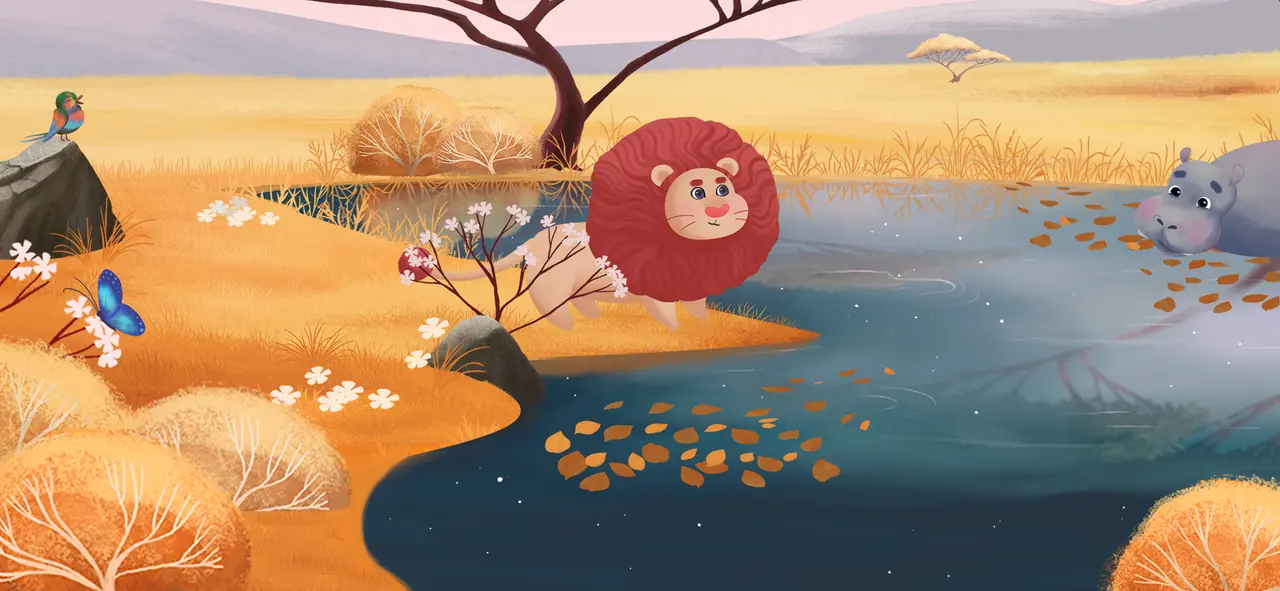
Scene from Leo, the Lion: the lion with a red mane at the edge of a savannah lake, with a hippo in the water and a blue butterfly nearby

What is free in the app

  • Artist's Gallery

    Painting

    Pictures to paint right on the device, at an easy pace and with no right or wrong.

  • Leo, the Lion

    Interactive narrative game, about 20 minutes

    Leo is a lion who roars happily across the savannah and cannot understand why the other animals run from him. Children build their own lion, tap, copy the sounds and follow Leo as he goes looking for water.

  • Leo, the Lion audiobook

    Audiobook, about 7 minutes

    The same Teaching Story to listen to slowly, eyes closed, in the car or before bed.

  • Move It

    Body movement activities

    Poses inspired by yoga and tai chi, such as the lion and the butterfly, to move the body and breathe with attention.

The app is available in English and Portuguese, for Android and iPhone.

The items above are free. The app has other content that is not part of this program. Truth and Tales belongs to Plot Kids, a partner of Eco 360.

Watercolor illustration of soft golden light falling between tree trunks in a forest

From your recycling bin to the Atlantic Forest

Eco 360 is a nonprofit association that, since 2007, has protected a stretch of Atlantic Forest on top of Morro do Macaco, in Bombinhas, Santa Catarina, Brazil. It looks after the trails, protects the area's biodiversity and keeps a controlled public visiting area.

You do not need a rainforest nearby to practice the same care. A park, a riverside path or a strip of grass by the school follows the same rule: what you bring, you take home. Ask your child who lives in your own green spaces and what a stray bottle would mean for them.

About the partnership

Eco 360 looks after the forest and runs environmental education. Truth and Tales brings technology and content for children. Together they created these activities to take environmental education into homes and classrooms.

What Eco 360 does

The Eco 360 Environmental Preservation Center protects the Atlantic Forest on top of Morro do Macaco, in Bombinhas, looks after the trails and keeps a controlled public visiting area. The purposes set out in its statute include environmental preservation, environmental education programs and partnerships with public and private institutions.

How Truth and Tales contributes

Truth and Tales is an app by Plot Kids for children ages 4 to 8, with interactive narrative games, audiobooks, body movement activities and painting. The app's Teaching Stories are written and adapted by people, with review by educators, therapists and doctors. In the program, the team contributes technology, illustrations and the app's free content.

Frequently asked questions

How do I explain recycling to a 4 year old?

Start with the object in their hands. Let them feel whether it is paper, plastic, glass or metal, and give each material its own box. Keep the words simple: this one can become a new box, this one we can use again at home. Short sorting games repeated over a few weeks let the idea settle without a lecture.

What can preschoolers safely make from recycled materials?

Clean cardboard boxes, paper tubes, cartons, bottle caps and plastic bottles work well for toys, shakers and simple bird feeders. Wash everything, and keep glass and cans with rough rims out of the craft pile. An adult handles scissors and craft knives, while the child designs, decorates, ties and glues. Small parts like caps stay away from children who still put things in their mouths.

Who runs this program?

The program comes from Eco 360, a nonprofit association that protects a stretch of Atlantic Forest on Morro do Macaco, in southern Brazil, in partnership with Truth and Tales, an app by Plot Kids for children ages 4 to 8. Eco 360 brings its experience in environmental education, and Truth and Tales contributes technology and content.

Do we need the app to do these activities?

No. Every activity on this page works with packaging, string and a walk outside, without a screen. The Truth and Tales app is an extra for families who want to continue: Leo, the Lion, its audiobook, the Move It movement activities and the Artist's Gallery painting are free, on Android and iPhone.

Should my child pick up litter we find outside?

We suggest not. Litter can hide broken glass, sharp metal or other hazards, so the child's job is to spot it and point. An adult with gloves picks it up and puts it in a bag for a public bin or the trash at home. Spotting is the part that asks for attention, and it keeps small hands safe.

Open it on your phone or tablet

Point your phone's camera at the code. It opens the right store for your device.

Or see the app on the Truth and Tales website