Eco 360 | Partners

An Eco 360 environmental education program with Truth and Tales

A nature scavenger hunt where every treasure stays put

3 hunts of 15 to 30 minutes, with paper, crayons and sharp eyes

Where is the hunt happening?

Tap an answer to jump straight to the activity.

A nature scavenger hunt for children ages 4 to 8 is a list of things to find, look at closely and leave where they are. This page gives you three versions from Eco 360: a color hunt indoors, a texture list for the backyard and a nature bingo card for the park, with ideas for each season.

Eco 360 is a nonprofit association that, since 2007, has protected a stretch of Atlantic Forest on top of Morro do Macaco, in Bombinhas, Santa Catarina, Brazil, and brings environmental education to the people who come close to it.

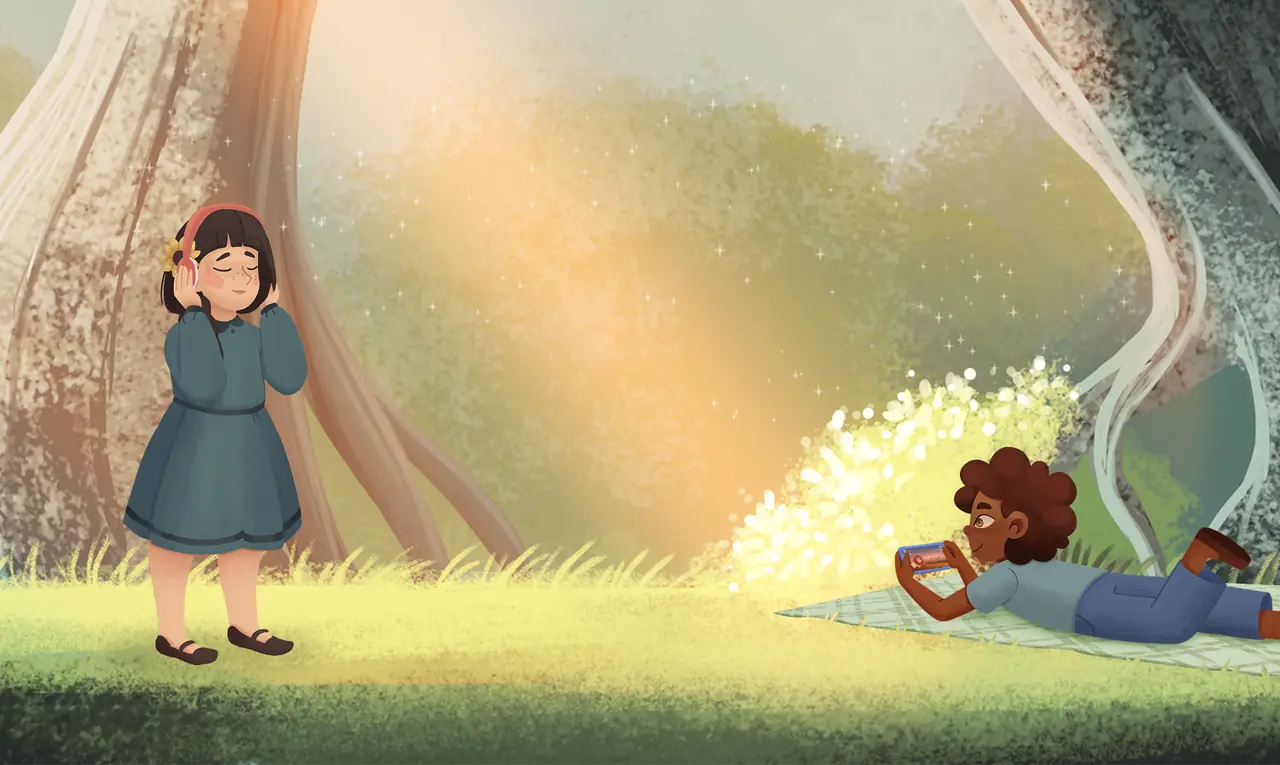
Illustration of a sunlit forest: a girl stands listening to the sounds around her and a boy lies on a picnic blanket

Three nature scavenger hunts for preschool and kindergarten

Every hunt has the same rule: find it, show it, and leave it where it lives. A drawing or a photo is the trophy. Keep the pace slow so your child has time to look, and let them decide when something counts.

The nature color hunt

Age
4 to 8
Time
15 minutes

You will need

  • A strip of paper or card about the length of a hand
  • Crayons or colored pencils
  • Picture books, a fruit bowl, houseplants

How to do it

  1. Draw five empty squares along the paper strip.
  2. Walk around the house looking for colors that come from nature: an orange in the fruit bowl, a houseplant leaf, a gray pebble, a feather in a picture book.
  3. Each time your child finds one, they color a square to match it as closely as they can.
  4. Talk about where each color comes from. Is the orange the same shade as maple leaves in the fall? Is the pebble darker when it is wet?
  5. Keep the strip and take it outside next time to look for the same colors in the yard or park.

What to notice: how closely your child compares two shades. Matching a crayon to a leaf asks for slow, careful looking, and green turns out to come in many versions.

The treasure list

Age
4 to 8
Time
20 minutes

You will need

  • A list on paper: something soft, something rough, something round, something that smells good, a seed
  • A pencil
  • A phone or camera, if you like

How to do it

  1. Make the list together. Use small drawings for children who do not read yet.
  2. Walk around the yard and look for one thing for each line of the list.
  3. When your child finds a treasure, they show it to you, touch it gently and describe it in their own words.
  4. Draw it or take a photo, then leave it exactly where it was. Flowers stay on the plant and seeds stay on the ground.
  5. Change the list with the seasons: acorns and crunchy leaves in fall, buds and new grass in spring, frost patterns in winter.

What to notice: how your child explores with touch and smell, and how they handle wanting to keep a treasure. Leaving it in place is part of the game, and a moment to practice holding back.

Nature bingo

Age
4 to 8
Time
30 minutes

You will need

  • A bingo card with nine squares, drawn at home
  • A crayon for ticking squares
  • Comfortable shoes

How to do it

  1. Draw a three-by-three card with nine pictures: a bird, a flower, an ant, a cloud, a puddle, a dry leaf, the sound of wind, a hole made by a bug, and a tree taller than your house.
  2. Walk slowly through the park. When someone sees or hears one of the nine, they point and everyone stops to check.
  3. Tick the square. Nothing is picked up or taken home; the card is all you carry.
  4. Whoever completes a line across, down or diagonally calls out bingo. Then keep playing to fill the whole card.
  5. On the way home, ask which square was the biggest surprise.

What to notice: the wind square and the bug hole. They ask your child to switch from looking to listening, and to spot small signs of animals that are out of sight.

Why a hunt where nothing is taken still counts

A scavenger hunt gives a child a reason to look. With a list in hand, the park stops being a blur of green and turns into separate things: a crooked stick, a smooth stone, a hole in a leaf. That shift from glancing to searching sits at the heart of outdoor learning in preschool and kindergarten.

Leaving every treasure in place adds a second layer. Your child wants to keep the feather, and draws it instead. Holding that wish for a moment is practice in self-regulation, one of the abilities that develop in early childhood and grow with repetition, together with attention and perception.

This program is built on one premise. People who perceive themselves and what surrounds them are better placed to respect what each place, person and moment needs, and the protection of nature depends on people like that. A hunt where everything stays behind is a playful way to practice.

  • Searching

    A list turns a walk into focused looking. Each square asks the eyes to slow down and sort.

  • Sensing

    Soft, rough, fragrant, loud: hunting with touch, smell and hearing widens what a child notices outdoors.

  • Leaving it be

    Taking a picture instead of the object keeps the place whole for the insects, birds and plants that live there.

To carry on with a tablet or phone

Move like the animals you found, with Move It

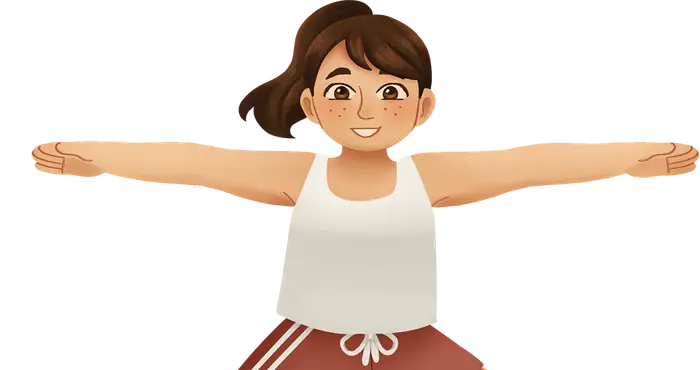
After a hunt full of bending, crouching and tiptoeing, your child can keep moving with Move It, body movement activities inspired by yoga and tai chi, with poses like the lion and the butterfly. Move It, the Leo, the Lion game and audiobook, and the Artist's Gallery are free in Truth and Tales.

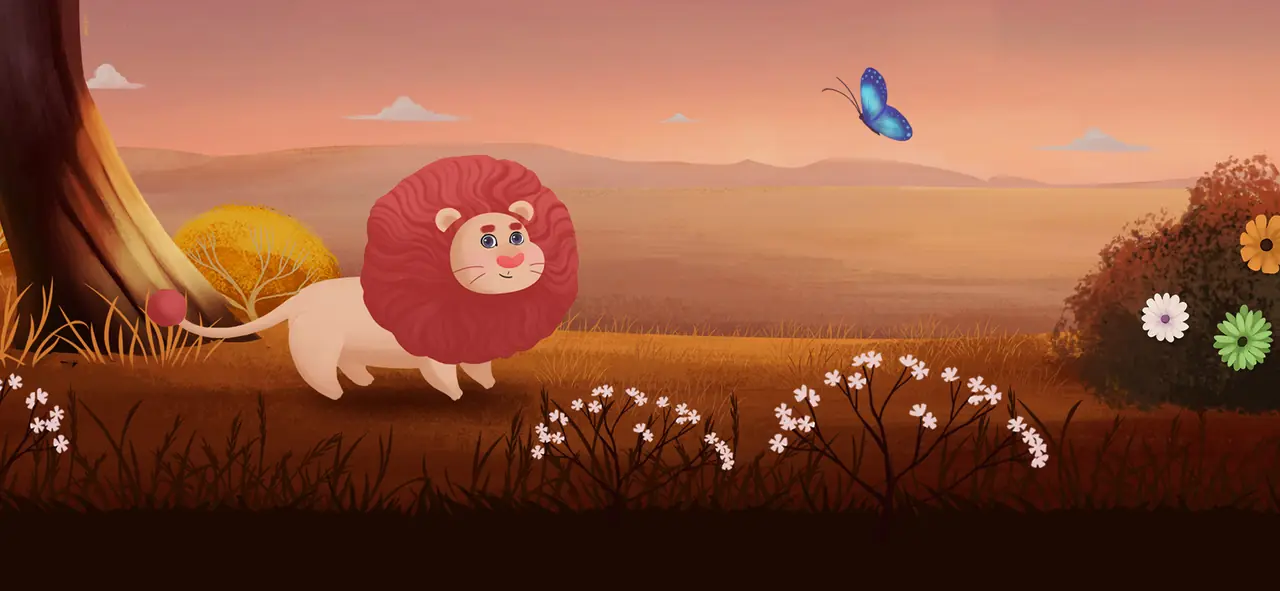
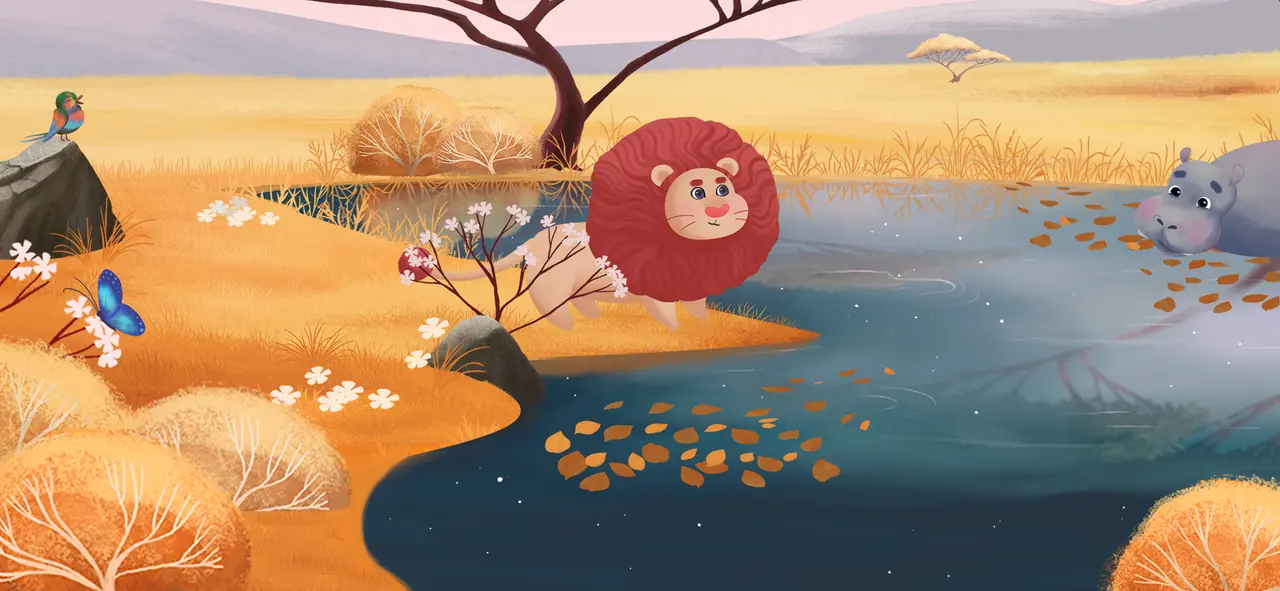
Scene from Leo, the Lion: the lion with a red mane at the edge of a savannah lake, with a hippo in the water and a blue butterfly nearby

What is free in the app

  • Move It

    Body movement activities

    Poses inspired by yoga and tai chi, such as the lion and the butterfly, to move the body and breathe with attention.

  • Leo, the Lion

    Interactive narrative game, about 20 minutes

    Leo is a lion who roars happily across the savannah and cannot understand why the other animals run from him. Children build their own lion, tap, copy the sounds and follow Leo as he goes looking for water.

  • Leo, the Lion audiobook

    Audiobook, about 7 minutes

    The same Teaching Story to listen to slowly, eyes closed, in the car or before bed.

  • Artist's Gallery

    Painting

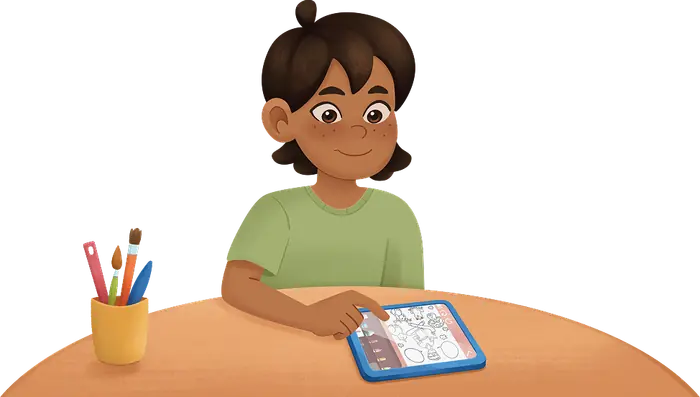
    Pictures to paint right on the device, at an easy pace and with no right or wrong.

The app is available in English and Portuguese, for Android and iPhone.

The items above are free. The app has other content that is not part of this program. Truth and Tales belongs to Plot Kids, a partner of Eco 360.

Illustration of tree trunks and leafy canopies in a sunlit forest

A hunt with the Atlantic Forest in mind

In Bombinhas, Santa Catarina, Brazil, the nonprofit Eco 360 has protected a stretch of Atlantic Forest on top of Morro do Macaco since 2007. It looks after the trails, protects the biodiversity of the area and keeps a controlled public visiting area. The Atlantic Forest is home to many species found nowhere else, and the leaves, seeds and branches on its floor are food and shelter for many of them.

Your nearest park works the same way on a smaller scale. The dry leaves your child ticks off on the bingo card feed the soil and hide beetles and worms. Take the card to your own neighborhood green space, and leave it as full of life as you found it.

About the partnership

Eco 360 looks after the forest and runs environmental education. Truth and Tales brings technology and content for children. Together they created these activities to take environmental education into homes and classrooms.

What Eco 360 does

The Eco 360 Environmental Preservation Center protects the Atlantic Forest on top of Morro do Macaco, in Bombinhas, looks after the trails and keeps a controlled public visiting area. The purposes set out in its statute include environmental preservation, environmental education programs and partnerships with public and private institutions.

How Truth and Tales contributes

Truth and Tales is an app by Plot Kids for children ages 4 to 8, with interactive narrative games, audiobooks, body movement activities and painting. The app's Teaching Stories are written and adapted by people, with review by educators, therapists and doctors. In the program, the team contributes technology, illustrations and the app's free content.

Frequently asked questions

What should be on a nature scavenger hunt for preschoolers?

Pick things your child can find in a few minutes and recognize without reading: a leaf, a stone, a feather, a cloud, a flower, an ant. Add one sound, such as a bird or the wind, and one texture, such as something rough. Use pictures instead of words for 4 and 5 year olds, and keep the list short enough to finish.

Is it okay to collect things during the hunt?

We suggest finding and leaving. Picking flowers, pulling leaves or carrying off stones disturbs the small animals that use them. A drawing, a photo or a tick on the card works as proof, and it turns the urge to keep something into a moment of looking closer. Fallen leaves can be admired where they lie and left for the soil.

Can I use these hunts with a kindergarten class?

Yes. Give each pair or small group one card, with an adult nearby, and set a clear boundary for the area. The bingo card suits a school field or a nearby park. Afterwards, gather in a circle so each group can share one surprise, and compare the cards.

Who runs this program?

This is an environmental education program of Eco 360, a nonprofit association created in 2007 that protects Atlantic Forest on Morro do Macaco, in southern Brazil. It runs in partnership with Truth and Tales, an app by Plot Kids for children ages 4 to 8 with interactive narrative games, audiobooks, body movement activities and painting.

Do I need the Truth and Tales app for the scavenger hunt?

Not at all. The three hunts on this page need paper, crayons and some time outdoors, with no screen involved. If your family wants more afterwards, the app has free content: the Leo, the Lion game and its audiobook, the Move It movement activities and painting in the Artist's Gallery, on Android and iPhone.

Open it on your phone or tablet

Point your phone's camera at the code. It opens the right store for your device.

Or see the app on the Truth and Tales website